Plaistow House Clearance in Plaistow

Plaistow House Clearance provides a practical house clearance service in Plaistow for homes that need rooms emptied with care, planning and clear communication. We handle a wide range of domestic clearance work, from single rooms and lofts to whole properties, and we aim to make the process straightforward for householders, landlords and anyone managing an emptying project. If you need a reliable way to clear furniture, general contents or bulky items, this service is designed to help you move from cluttered to workable in a structured way.
The work usually starts with understanding what needs to stay, what needs to go and whether there are items that require special handling. A careful house clearance can support moves, probate matters, downsizing, refurbishments and end-of-tenancy preparation. It can also be useful when a property has simply accumulated too much over time. We focus on clear scope and sensible removal, so the right amount of work is carried out without unnecessary disruption or overcomplication.
For a clear starting point, look at the house clearance service alongside the information on pricing and quotes. If you are planning a larger job that includes upstairs rooms, storage areas or mixed contents, a brief written outline of the spaces involved helps the quote reflect the actual task. Request a quotation when you are ready to compare the work required with the time and resources available.
House clearance work and what it can include
House clearance is not only about taking away visible furniture. It often involves separating reusable items, assessing what can be moved safely, and working through different rooms in a sensible order. A careful clearance can include sofas, tables, wardrobes, beds, boxes, small appliances and loose household contents. Where access is narrow or stairs are involved, the work needs to be arranged so items are removed without avoidable damage to walls, bannisters or floors.
Domestic clearances vary widely from property to property, so it helps to think in terms of room by room decisions. Some homes need only selected items removed, while others need an entire property prepared for sale, let or renovation. We can also deal with furniture that is awkward to carry, heavy to shift or simply too large for standard disposal arrangements. When the contents are mixed, a structured approach keeps the work orderly and avoids confusion on the day.
Useful starting points for a house clearance enquiry can be grouped into a few simple questions:
- Which rooms are included, and are any spaces left untouched?
- Are there large items, fragile pieces or heavy furnishings to remove?
- Is the property empty, partly occupied or still in use?
- Are there any items that need to be set aside for retention or donation?
Furniture, contents and item-by-item removal

A large part of house clearance work is the removal of furniture and general contents in a way that suits the property. Some customers need one or two items taken away; others need a complete set of household contents cleared from several rooms. We can deal with ordinary domestic furniture such as cupboards, bookcases, chairs and bed frames, as well as smaller contents gathered from shelves, drawers and cupboards. The aim is to leave the space ready for its next stage without creating extra sorting work for you.
Where there are mixed items, the clearance can be broken into sensible categories so that the useful pieces are not treated the same way as broken or unwanted items. This matters when a property contains a combination of older furniture, boxed belongings and general household clutter. It also helps when certain items need to remain on site while others leave. A properly managed clearance should be adaptable, but it should also stay focused on the agreed list rather than becoming a vague tidy-up.
We also provide related support through the furniture clearance and furniture disposal pages, which are useful if the main concern is larger items rather than every room in the property. If the job includes other domestic waste as well as furniture, the waste removal page explains the broader service scope. A short call or message with the main item list is often enough to get the process moving.
Whole-property clearances for changing household needs
Some projects are better treated as whole-property clearances rather than a series of isolated removals. That approach suits homes being emptied after a move, properties being prepared for refurbishment, and situations where the contents of several rooms have to be handled together. Whole-property work is usually more efficient when the plan is clear from the outset, because it reduces repeated visits and keeps the removal sequence logical. It can also make it easier to separate what stays from what goes.
Whole-house work may involve bedrooms, living areas, kitchens, understairs storage, hallways and utility spaces, with each area needing a different level of attention. A property that looks straightforward from the outside can still contain bulky furniture, bags, boxes and mixed loose contents that need handling in stages. The best results come from treating the clearance as a proper task rather than a rushed collection, especially where access, parking or internal carrying distances affect how the work is carried out.
When a project feels too broad to describe in one sentence, use plain notes rather than guesswork. A message that says what is staying, what is leaving and which rooms are involved is usually more useful than a vague request for “everything goneâ€. If the property includes a loft, garage or outbuilding, include that as well so the quotation matches the full scale of the work.
Rooms, storage spaces and difficult access areas
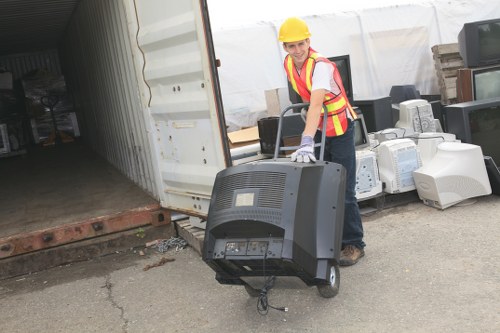
House clearances often extend beyond the main living rooms. Loft spaces, garages, cupboards and spare rooms tend to collect items that are no longer used every day but still need removing properly when a property is being emptied. These areas can be awkward because they often contain mixed belongings, stacked boxes or items that have been stored for a long time. A clear clearance plan helps prevent small items being missed and stops the job becoming fragmented across several visits.
Where access is limited, the method matters as much as the removal itself. Narrow staircases, tight loft hatches, shared entrances and long carries all affect how the work should be scheduled and priced. A careful house clearance does not rely on speed alone; it also depends on handling items safely and choosing the right order for moving them. That is especially important when furniture must be turned, lifted or carried through the property with care.
For storage-heavy jobs, the loft clearance and garage clearance services may be useful references if those spaces are central to the project. If your property has outdoor contents or mixed garden storage to remove, the garden clearance page may also help define the work. A clear list of the spaces involved allows the quotation to stay realistic and avoids later changes.
Preparing a quotation for house clearance
A good quotation starts with the right information, and for house clearance that usually means the property type, the rooms involved and the kind of contents to be removed. Photographs can help when the job includes several areas or when bulky items are difficult to describe. An item list is also useful, especially if some belongings are staying on site while others are to be cleared. These details make it easier to understand whether the work is selective, partial or full-property in scope.
There is no need to overcomplicate the enquiry. Simple notes about access, parking, floor level, stairs and any items that need special handling are often enough to shape the job properly. If the clearance is linked to a move, a tenancy ending or a property being made ready for sale, mention the deadline rather than assuming it is obvious. Clear facts are usually better than long explanations, and they make it easier to build a quotation that reflects the real task.
If you want to compare different ways of approaching the same job, the home clearance and flat clearance pages show related domestic options, while the about us page gives broader company information. For many customers, the quickest path is simply to gather the room list, note the larger items and then request a quotation once the scope is clear.
Furniture, waste and mixed clearance decisions
Not every house clearance is made up of the same kind of contents. Some jobs are mainly furniture removals, while others involve a mix of general household items, bags, boxes and waste that has built up over time. The practical question is not simply what is being removed, but how the different categories should be handled together. A well-planned clearance can separate bulk items from lighter contents and avoid confusion about what belongs in the job and what should remain.
The right route depends on the property and the contents, not on a one-size-fits-all label. For example, a room with just a few large pieces may be better approached as furniture clearance, while a property with mixed contents from several rooms may be better handled as a full house clearance. Where the contents include a broader mix of items, the work can be coordinated with other waste removal services so the scope remains tidy and accountable.
Business waste removal and builders waste clearance are relevant only when the job genuinely includes those types of materials; they are not substitutes for domestic clearance. For homes, the key is to describe what is actually on site and avoid inflating the task. If the quotation needs to cover several item types, one well-organised description is usually enough to keep the conversation efficient.
What usually affects the work
Three common factors influence how a house clearance is planned: the volume of contents, the difficulty of access and the level of sorting required. Volume affects the time and space needed. Access affects the carrying method. Sorting affects whether the work is a straightforward removal or a more detailed room-by-room task. These are practical considerations, not sales points, and they help explain why two clearances that look similar at first glance can still require different arrangements.
Managing sensitive domestic clearances with care

Some house clearances involve more than ordinary household contents. A property may contain personal possessions that need careful separation, or rooms that have been left untouched for a long time and now require thoughtful handling. In those situations, the important thing is to keep the process orderly and respectful. The work should allow for items to be checked, set aside or removed in the agreed way, rather than rushing everything together into one pile.
Domestic clearances of this kind often need a slower pace and a clearer inventory of what is being removed. That is especially useful when family members, landlords or solicitors need confidence that the agreed items have been handled properly. While the practical removal may still be straightforward, the communication around it should be exact. Precision matters more than speed when a property contains mixed belongings with different levels of importance.
Our related service pages such as insurance and safety and health and safety policy may help if you want to understand the working standards behind the clearance process. For a broader view of how removed items are handled, recycling and sustainability is also available. A concise enquiry that identifies the sensitive items from the general ones is usually the best starting point.
About Plaistow
Plaistow is a district in the London Borough of Newham in east London, with a history shaped by marshland, market gardening, industry and later urban housing development. The area lies close to Stratford, West Ham and Canning Town, and its street pattern reflects a long period of change from rural edge land to a densely built urban neighbourhood. Plaistow takes its name from older forms recorded in medieval sources, and over time the district became increasingly tied to London’s expansion across the Lea Valley and surrounding eastern boroughs. That background is still visible in the mix of terraced streets, post-war estates and local high streets that give the area its character today.
House clearance planning, access and sensible timing
Timing can make a house clearance much easier to manage, particularly when the property is still partly occupied or needs to be ready for another stage of work soon afterwards. A sensible schedule allows the clearance to be carried out methodically rather than squeezed into an unrealistic slot. If the home still contains essentials, those should be separated first so the team knows what can be removed and what must stay. That approach keeps the task orderly and reduces the risk of unnecessary handling.
Access details are equally important. Parking arrangements, entry points, stairs, lifts and shared hallways all affect how efficiently a clearance can be done. If a property is in a block or has restricted access, the method may need to be adapted so the removal causes as little disturbance as possible. These practical details do not need a long explanation, but they do need to be accurate. A short, specific note is often better than a general description of the property.
Where a job involves multiple rooms and different item types, it is often helpful to think in stages. A first stage may include obvious furniture and large contents, while a second stage deals with smaller items, cupboards or storage spaces. That does not mean every clearance has to be split in two; it simply shows how a realistic quotation can be shaped around the actual work. When you are ready, ask for a quotation and include the main rooms, large items and any access restrictions.
End-of-tenancy, moves and property preparation

House clearance is often part of a wider change, such as ending a tenancy, moving home or preparing a property for sale or refurbishment. In these cases, the clearance is only one part of the job, but it is often the part that determines whether the next step can proceed smoothly. A property that is cleared in a logical way is easier to inspect, clean and hand over, and it is simpler for other trades or agents to work around an empty space than around leftover contents.
For move-related clearances, the important distinction is between items being kept, donated, sold or removed. That distinction helps avoid accidental disposal and means the property can be emptied without second-guessing. When time is tight, clarity matters even more. The more accurately the contents are described at the beginning, the less likely it is that the clearance will need correction later. That makes the quotation process practical rather than speculative.
If your household change includes bedrooms, lounge furniture, attic storage or general contents from more than one room, a tailored house clearance is usually the best fit. Use the service pages for flat clearance, office clearance or about us only when those settings genuinely match the work. Otherwise, keep the enquiry focused on the domestic property and its contents, then request a quotation when you are ready to set the job in motion.